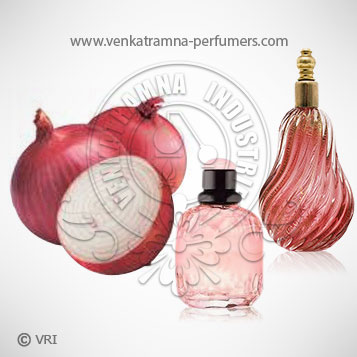

| Botanical Name | Allium cepa |
| Common Name | Onion, Oignon, Allium cepa |
| Country of Origin | Iran, West Pakistan |
| Solubility | Soluble in oil, insoluble in water |
| Specific Gravity | Not Applicable |
| Optical Rotation | Not Applicable |
| Refrective Index | Not Applicable |
| PlantPart | Bulbs |
| Bland With | Bergamot, Clary Sage, Lavender, Geranium, Jasmine, Neroli, Patchouli, Tea Tree, Rose, Lemon and Ylang-ylang. |
| CAS No | 8000-78-0 |
| Flash Point | 115.00°F |
| Extraction Method | steam distillation |
The oleoresin is extracted from fresh bulb of the onion, which are harvested between September and April. Onion has an ancient reputation as a curative agent. It is high in vitamins A, B and C and shares many of the properties of garlic, to which it is closely related. The oleoresins have lightly sweet & characteristic flavors of onion.
While onion has a long and extensive history, little is known beyond modern applications
Color : a pale yellow or brownish-yellow mobile liquid with strong, unpleasant, sulfur odor,
Aroma : Onion Essential Oil has a strong, unpleasant, sulphuraceous odor
Volatile oil content < 5% Solvent residue max. 25 ppm Total ash: not more than 3%
Onion Oleoresin can be used as spice and seasoning mixes, for meats, sausages and other food preparations. It is also used in some pharmaceutical preparations for colds, coughs.